
Industry Solutions
AI Agents for Logistics
Coordinate documents, exceptions, status updates, and operational decisions across complex logistics workflows.
KeenSight designs AI-enabled logistics workflows around the systems, documents, operating rules, service commitments, and human escalation paths that keep freight and fulfillment moving.
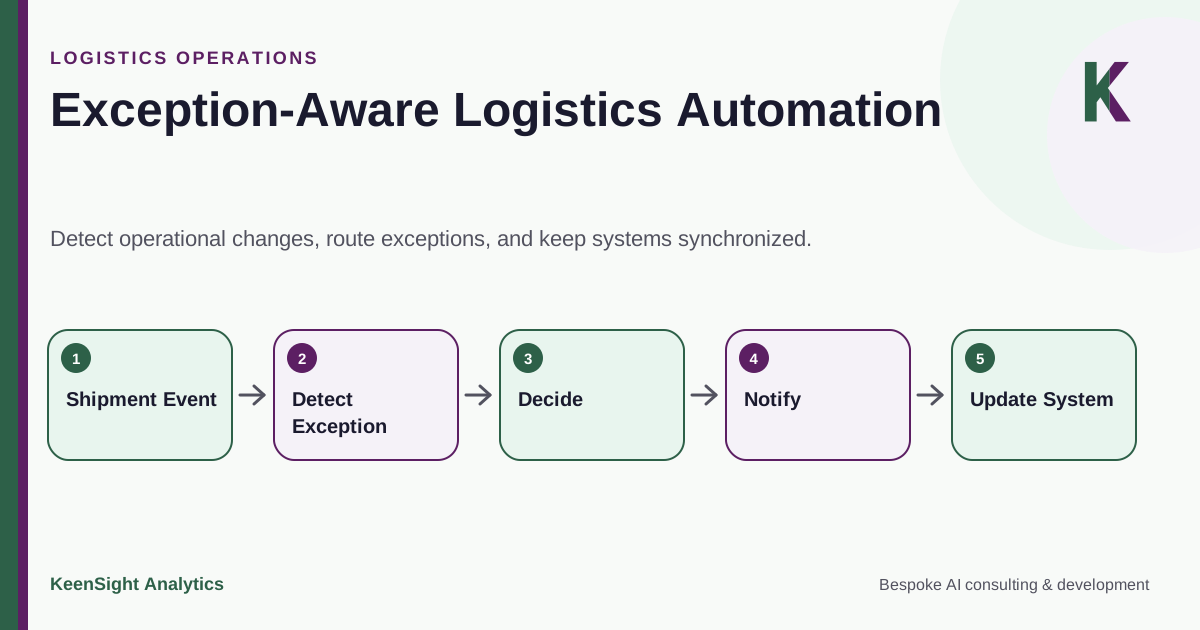
Exception-Aware Logistics Automation
Detect operational changes, route exceptions, and keep systems synchronized.
- Shipment Event
- Detect Exception
- Decide
- Notify
- Update System
Logistics Workflow Opportunities
Reduce manual coordination across documents, systems, status changes, and exception queues.
Shipment Exception Triage
Classify delays, missing information, service issues, and operational exceptions and route them to the right queue with supporting context.
Document Processing
Extract and normalize information from shipping documents, invoices, confirmations, correspondence, and other operational records.
Workflow Orchestration
Coordinate handoffs across transportation, warehouse, customer-service, and back-office processes using explicit rules and escalation paths.
Planning Support
Assemble operating data, constraints, and recent exceptions into structured decision-support views for planners and operators.
Status Communication
Prepare context-aware customer or internal updates from approved system data while keeping configurable review controls for sensitive cases.
TMS, WMS & ERP Integration
Connect workflow steps to transportation, warehouse, ERP, CRM, collaboration, and data systems through available integration interfaces.
Design Around Exceptions, Not Just the Happy Path
Logistics processes often break down at the edges: missing documents, late status events, inconsistent reference data, capacity changes, customer requests, and system mismatches. A useful AI workflow needs explicit exception categories, ownership, fallbacks, and audit context so uncertain cases reach the right person instead of disappearing into automation.
A Workflow-First Implementation
Map Events & Inputs
Identify documents, status events, systems, queues, service rules, and recurring exception types.
Define Routing Logic
Specify what can be automated, what needs deterministic validation, and what requires human escalation.
Connect Operations Systems
Integrate the systems needed to read context, create tasks, update records, or prepare downstream actions.
Test Real Exceptions
Validate the workflow against normal transactions, delayed events, incomplete data, duplicates, and other operational edge cases.
Across exception handling, planning, and service workflows, prioritize operational AI investments and plan enterprise AI integrations and platforms around the systems that carry current operating information.
Bring Us an Operational Bottleneck
We can map the documents, events, systems, controls, and exception paths before deciding where AI should act.
Continue with practical guidance
- AI Agents for Logistics and Supply Chain Operations
Build logistics AI workflows around shipment events, exception cases, coordination, confirmed actions, recovery, and measurable service and operating outcomes.