
Industry Solutions
AI Agents for Legal Workflows
Support document-heavy legal operations with controlled AI workflows that preserve human judgment and review.
KeenSight designs bespoke AI-enabled workflows for legal teams and legal operations. The focus is on organizing information, accelerating repetitive review, and connecting existing systems while keeping qualified professionals responsible for legal analysis, decisions, and approvals.
AI Support for Legal Workflows
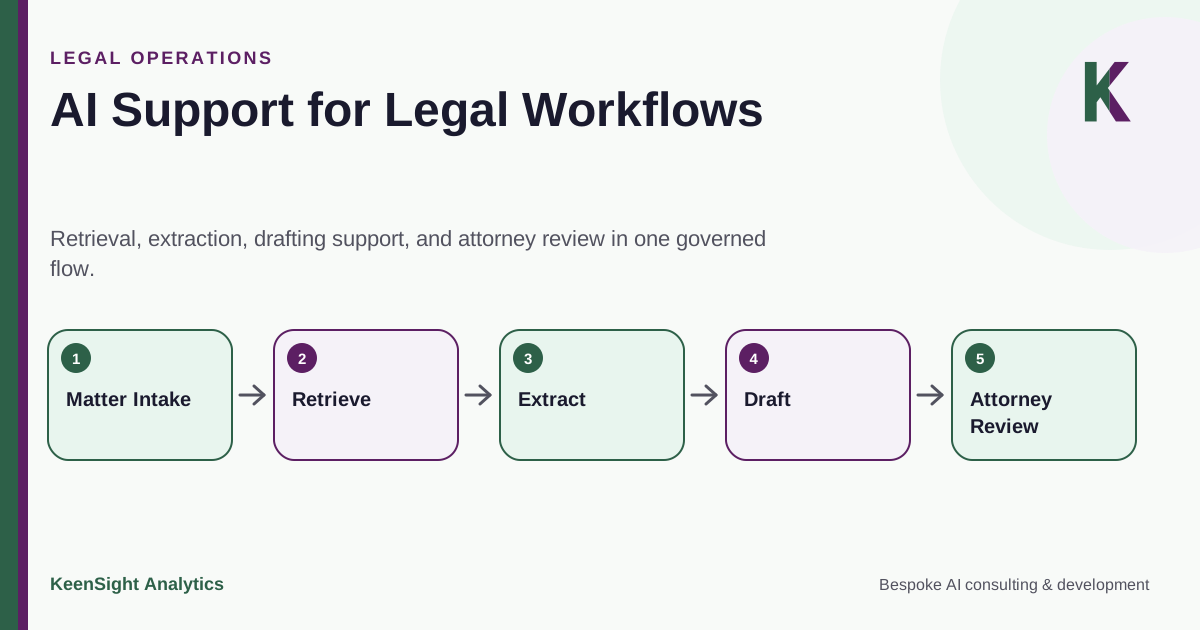
Retrieval, extraction, drafting support, and attorney review in one governed flow.
- Matter Intake
- Retrieve
- Extract
- Draft
- Attorney Review
Legal Workflow Opportunities
Use AI to structure documents and workflow context—not to replace legal judgment.
Matter & Request Intake
Classify requests, capture structured context, identify missing information, and route matters into the appropriate legal or operational queue.
Document Review Support
Extract configured clauses, dates, parties, obligations, and other structured information for attorney or reviewer validation.
Knowledge Retrieval
Search approved internal knowledge sources and assemble relevant material with source context for a professional to evaluate.
Drafting Support
Prepare first-pass summaries, correspondence, checklists, or document language from approved source material and templates for human review.
Obligation & Deadline Workflows
Turn validated contractual or matter information into structured tasks, review queues, and follow-up workflows.
Review & Approval Controls
Require explicit human review for configured document classes, material decisions, external communications, or other high-impact outputs.
Human Review Is Part of the Architecture
Legal workflows can involve privilege, confidentiality, professional obligations, material business decisions, and jurisdiction-specific requirements. The system design should therefore define approved data sources, access controls, retention requirements, reviewer roles, escalation paths, and the exact actions an AI workflow is permitted to take. KeenSight designs the technology around those boundaries.
From Use Case to Controlled Workflow
Define the Matter
Choose a bounded workflow and document the users, source material, decisions, systems, and risks involved.
Set Permissions & Review
Define access, confidentiality boundaries, required approvals, prohibited actions, and escalation conditions.
Test Against Real Documents
Evaluate normal examples, ambiguous language, missing context, conflicting sources, and other edge cases.
Operate with Oversight
Monitor exceptions, reviewer feedback, source changes, and workflow quality and update controls as requirements evolve.
For knowledge and document workflows, clarify AI review and accountability and evaluate information boundaries and sourcing before extending access or action authority.
Evaluate a Legal Workflow
Bring a document-heavy or coordination-heavy process and the controls it requires. We will help map where AI can assist while keeping professional review in the loop.
Continue with practical guidance
- AI for Law Firms: Legal Research, Contract Review, Matters, and Operations
Build AI-assisted legal research, contract review, matter intake, and obligation workflows with source verification, confidentiality, and professional ownership.